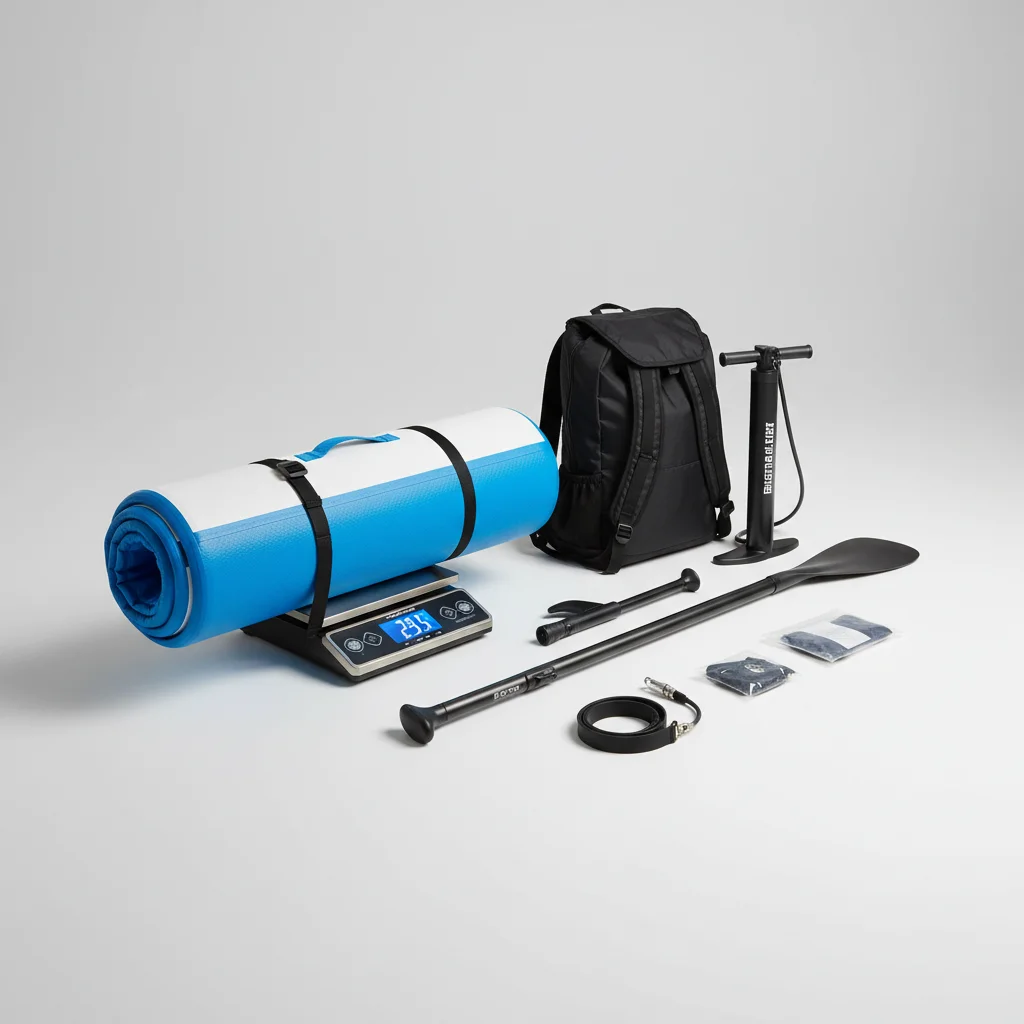
The weight of an inflatable paddle board varies significantly, typically ranging from 17 to 30 pounds for most all-around and touring models. This range is influenced by factors like board length, width, thickness, and the materials used in its construction. Understanding these weight differences is crucial for portability, especially if you plan to carry your board long distances or frequently transport it.
Factors Influencing Inflatable Paddle Board Weight
Several key elements contribute to the overall weight of an inflatable paddle board. The most significant is the board’s dimensions; longer, wider, and thicker boards naturally require more material, leading to increased weight. For instance, a 12-foot touring board will almost always be heavier than a 10-foot all-around board. The internal construction, such as single-layer versus double-layer PVC or fusion technology, also plays a critical role. Double-layer boards offer enhanced durability and rigidity but come with added weight. Advanced fusion technologies can reduce weight while maintaining stiffness.
Additional features like extra D-rings, cargo bungee systems, and reinforced rails can also add a small amount of weight. While individually minor, these components collectively contribute to the final product’s mass. The type of fin box and the number of fins can also have a slight impact, though this is generally less significant than the main board construction.
Average Weights for Different Board Types
Different types of inflatable paddle boards are designed for specific uses, and their weights reflect these purposes. All-around boards, which are the most common, typically weigh between 20 and 25 pounds, offering a good balance of stability and portability. Touring boards, designed for longer distances and often longer and narrower, can range from 25 to 30 pounds due to their increased size and often more robust construction. Yoga-specific boards, which prioritize stability and deck space, might be on the heavier side, around 22-28 pounds, to provide a solid platform.
On the lighter end, some ultra-light or race-oriented boards can weigh as little as 17-20 pounds, achieved through advanced materials and minimalist designs. These boards often sacrifice some durability for maximum speed and ease of transport. Conversely, tandem boards or those designed for multiple riders can easily exceed 35 pounds due to their much larger dimensions and reinforced structures.
Impact of Board Weight on Portability and Performance
|
Our Picks for the Best Paddle Board in 2026
As an Amazon Associate I earn from qualifying purchases.
|
||
| Num | Product | Action |
|---|---|---|
| 1 | Roc Inflatable Stand Up Paddle Board 10' 6" with Premium SUP Paddle Board Accessories, Wide Stable Design, Non-Slip Comfort Deck for Youth & Adults |

|
| 2 | FunWater Inflatable Stand Up Paddle Board with Premium SUP Paddleboard Accessories, Anti-Slip EVA Deck, 11'/10'6'' Paddle Boards for Adults & Youth of All Skill Levels |
|
| 3 | Roc Inflatable Stand Up Paddle Board 10' 6" with Premium SUP Paddle Board Accessories, Wide Stable Design, Non-Slip Comfort Deck for Youth & Adults |
|
| 4 | Niphean Inflatable Stand Up Paddle Board with SUP Accessories, Anti-Slip EVA Deck, 10’6’’ Inflatable Paddle Boards for Adults & Youth of All Skill Levels |
|
| 5 | Highpi Inflatable Stand Up Paddle Board for Youth and Adults – Wide Sup with Premium Accessories, Blow Up Paddleboard for Surfing, Fishing, Yoga & More |
|
| 6 | Roc Inflatable Stand Up Paddle Boards with Premium SUP Paddle Board Accessories, Wide Stable Design, Non-Slip Comfort Deck for Youth & Adults |
|
| 7 | Retrospec June Nano Kids Inflatable Fishing Paddle Board SUP Kayak: 9'6" Hybrid Paddleboard with Rod Holders, Removable Seat - Lightweight Portable Youth Fishing Board |
|
| 8 | Roc Inflatable Stand Up Paddle Board 10' 6" with Premium SUP Paddle Board Accessories, Wide Stable Design, Non-Slip Comfort Deck for Youth & Adults |
|
| 9 | FunWater Inflatable Stand Up Paddle Board with Premium SUP Paddleboard Accessories, Anti-Slip EVA Deck, 11'/10'6'' Paddle Boards for Adults & Youth of All Skill Levels |
|
| 10 | FBSPORT 11' Premium Stand Up Paddle Board, Yoga Board with SUP Accessories & Carry Bag | Wide Stance, Surf Control, Non-Slip Deck, Leash, Paddle and Pump for Youth & Adult |
|
The weight of your inflatable paddle board directly affects its portability. A lighter board is significantly easier to carry from your car to the water, especially if you have a longer walk or need to navigate uneven terrain. This is particularly important for solo paddlers or those with physical limitations. For frequent travelers, a lighter board also makes packing and airline baggage limits less of a concern.
While weight is a primary factor for portability, it also has subtle impacts on performance. Lighter boards can feel more nimble and easier to maneuver, especially in calm waters. However, in choppier conditions or strong winds, a slightly heavier board might offer a more stable and grounded feel. The trade-off between weight and rigidity is also important; a board that is too light might flex more, reducing efficiency, while a well-constructed board can be both light and stiff.
Tips for Managing a Heavier Paddle Board
If you find yourself with a heavier inflatable paddle board, there are several strategies to make transport and handling easier. Consider investing in a paddle board cart or trolley, which can significantly reduce the strain of carrying your board over longer distances. Many carts are designed to collapse for easy storage. Another option is to use a backpack with a good hip belt and padded shoulder straps, which distributes the weight more evenly across your body.
- Utilize a paddle board cart for long hauls.
- Invest in a high-quality backpack with proper support.
- Deflate partially for shorter carries to reduce bulk.
- Carry with a partner when possible for easier lifting.
- Practice proper lifting techniques to avoid injury.
Choosing the Right Weight for Your Needs
When selecting an inflatable paddle board, consider your primary use case and physical capabilities. If you prioritize ease of transport, solo adventures, or have limited strength, a lighter board (under 22 pounds) might be ideal. If durability, stability, and performance in varied conditions are more important, and you don’t mind a bit more weight, a board in the 22-30 pound range will likely serve you better. Always balance the desire for a light board with the need for adequate rigidity and features for your intended paddling environment.
