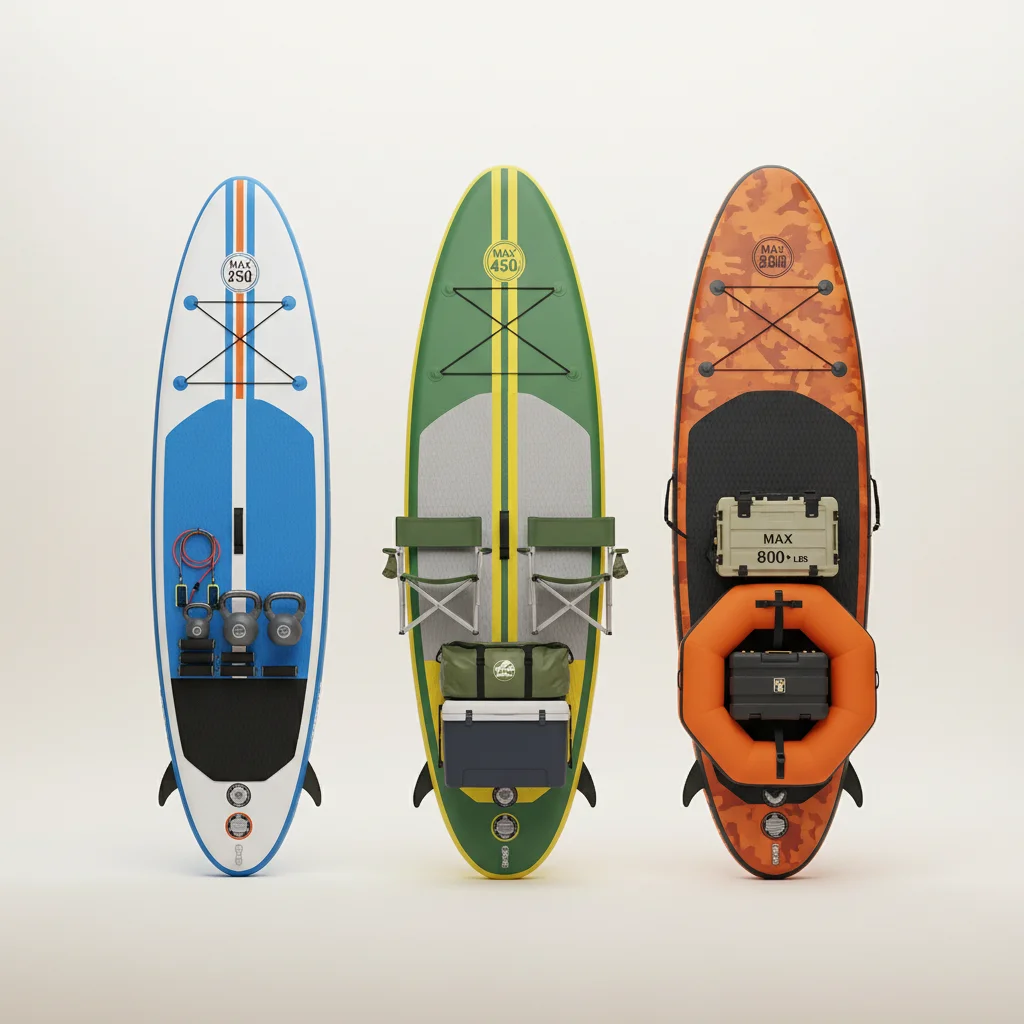
Inflatable paddle boards are surprisingly robust, with most models designed to comfortably support between 200 to 350 pounds. However, the exact weight capacity varies significantly based on the board’s size, construction, and intended use. Understanding your board’s specific limit is crucial for safety, performance, and longevity, preventing issues like reduced stability or even damage.
Factors Influencing Weight Capacity
Several key factors determine an inflatable paddle board’s weight capacity. The board’s length and width play a significant role; longer and wider boards generally offer greater buoyancy and stability, thus supporting more weight. Thickness is also critical, with 6-inch thick boards typically offering superior rigidity and weight support compared to 4-inch models. The internal construction, particularly the drop-stitch technology used, contributes to the board’s overall stiffness and ability to handle heavier loads without excessive flex.
Material quality and the number of PVC layers also impact durability and weight bearing. Higher-quality, multi-layer PVC constructions are more resistant to punctures and can maintain their shape better under stress. Always check the manufacturer’s specifications, as these provide the most accurate weight limit for a particular model.
Why Adhere to Weight Limits?
Exceeding an inflatable paddle board’s stated weight capacity can lead to several problems. The most immediate effect is a noticeable decrease in stability, making the board harder to balance and increasing the risk of falling. The board will also sit lower in the water, creating more drag and making paddling significantly more difficult and less efficient. This can quickly turn an enjoyable outing into a frustrating struggle.
Long-term, consistently overloading your paddle board can put undue stress on its seams and internal structure, potentially leading to premature wear, leaks, or even catastrophic failure. While modern inflatable boards are built tough, they are not indestructible. Adhering to the weight limit ensures optimal performance, extends the lifespan of your board, and keeps you safe on the water.
Calculating Your Load: Rider, Gear, and Companions
|
Our Picks for the Best Paddle Board in 2026
As an Amazon Associate I earn from qualifying purchases.
|
||
| Num | Product | Action |
|---|---|---|
| 1 | Highpi Inflatable Stand Up Paddle Board for Youth and Adults – Wide Sup with Premium Accessories, Blow Up Paddleboard for Surfing, Fishing, Yoga & More |

|
| 2 | Roc Inflatable Stand Up Paddle Boards with Premium SUP Paddle Board Accessories, Wide Stable Design, Non-Slip Comfort Deck for Youth & Adults |
|
| 3 | FunWater Inflatable Stand Up Paddle Board with Premium SUP Paddleboard Accessories, Anti-Slip EVA Deck, 11'/10'6'' Paddle Boards for Adults & Youth of All Skill Levels |
|
| 4 | Niphean Inflatable Stand Up Paddle Board with SUP Accessories, Anti-Slip EVA Deck, 10’6’’ Inflatable Paddle Boards for Adults & Youth of All Skill Levels |
|
| 5 | FBSPORT 11' Premium Stand Up Paddle Board, Yoga Board with SUP Accessories & Carry Bag | Wide Stance, Surf Control, Non-Slip Deck, Leash, Paddle and Pump for Youth & Adult |
|
| 6 | Retrospec June Nano Kids Inflatable Fishing Paddle Board SUP Kayak: 9'6" Hybrid Paddleboard with Rod Holders, Removable Seat - Lightweight Portable Youth Fishing Board |
|
| 7 | Roc Inflatable Stand Up Paddle Board 10' 6" with Premium SUP Paddle Board Accessories, Wide Stable Design, Non-Slip Comfort Deck for Youth & Adults |
|
| 8 | Roc Inflatable Stand Up Paddle Board 10' 6" with Premium SUP Paddle Board Accessories, Wide Stable Design, Non-Slip Comfort Deck for Youth & Adults |
|
| 9 | Roc Inflatable Stand Up Paddle Board 10' 6" with Premium SUP Paddle Board Accessories, Wide Stable Design, Non-Slip Comfort Deck for Youth & Adults |
|
| 10 | FunWater Inflatable Stand Up Paddle Board with Premium SUP Paddleboard Accessories, Anti-Slip EVA Deck, 11'/10'6'' Paddle Boards for Adults & Youth of All Skill Levels |
|
When considering your inflatable paddle board’s weight capacity, it’s important to account for more than just your body weight. You need to factor in the weight of all gear you plan to bring, such as coolers, dry bags, fishing equipment, or even a small pet. If you plan to paddle with a child or another person, their weight must also be included in the total load. A good rule of thumb is to add a buffer of 10-20% to your estimated total weight to ensure you stay well within the board’s safe operating limits.
For example, if you weigh 180 pounds and plan to bring 20 pounds of gear, your total load is 200 pounds. If your board has a 250-pound capacity, you have a comfortable 50-pound buffer. Always err on the side of caution, especially if you are new to paddleboarding or plan to be in challenging water conditions.
Choosing the Right Board for Your Needs
Selecting an inflatable paddle board with an appropriate weight capacity is crucial for a satisfying experience. If you are a larger individual, frequently paddle with children or pets, or plan to carry a lot of gear for touring or fishing, look for boards with higher weight limits, often in the 300-400+ pound range. These boards are typically longer, wider, and thicker, providing the necessary buoyancy and stability.
Consider the type of paddling you’ll be doing. All-around boards offer a good balance for various activities, while touring boards are designed for efficiency over distance and often have higher capacities for gear. Yoga-specific boards prioritize stability. Always read reviews and compare specifications before making a purchase.
- For solo paddlers under 200 lbs: Boards with 250-300 lb capacity are usually sufficient.
- For larger individuals or those with light gear: Look for 300-350 lb capacity.
- For tandem paddling, fishing, or heavy gear: Opt for 350-450+ lb capacity boards.
- For multi-person or expedition use: Some specialized boards offer capacities exceeding 500 lbs.
Maintaining Optimal Performance
Beyond adhering to weight limits, proper inflation is key to maximizing your inflatable paddle board’s performance and weight-bearing capabilities. Always inflate your board to the manufacturer’s recommended PSI (pounds per square inch). Under-inflated boards will feel soft, flex excessively, and significantly reduce stability and weight support, regardless of their stated capacity. Over-inflation, while less common with modern pumps, can also stress seams and materials.
Regular inspection of your board for any signs of wear, especially around seams and valve areas, can help prevent issues. Proper cleaning and storage, as detailed in other guides on ReviewInsides.com, will also contribute to the board’s longevity and ability to perform consistently under its rated load.

Good info here. I’ve always wondered about the real limits. My old board felt a bit wobbly when my wife and I tried to go out together, even though we were technically under the listed capacity. Now I understand that the length and width really make a difference for stability, not just the raw weight number. I’m looking at a longer, wider model for our next purchase.
This was exactly what I needed! I’m new to paddleboarding and was overwhelmed by all the options. Knowing that most boards support 200-350 pounds helped me narrow down my choices significantly. I feel much more confident now about picking a board that will be safe and perform well for my weight. Thanks for breaking it down so clearly!
I was really worried about getting an inflatable board because I’m a bigger guy and often paddle with my dog. This guide on weight capacity was super helpful. I ended up getting a 6-inch thick board, and it handles my 220 lbs plus my 50 lb lab with no problem at all. It’s way more stable than I expected, even with the extra weight.
The info about drop-stitch technology was interesting, but I still had a hard time finding the exact weight capacity for my specific board model online. It would be great if manufacturers were more consistent with listing this clearly. My board says 250 lbs, but it feels a bit sluggish even with just me (180 lbs) and a small cooler. Maybe I just need to inflate it more.