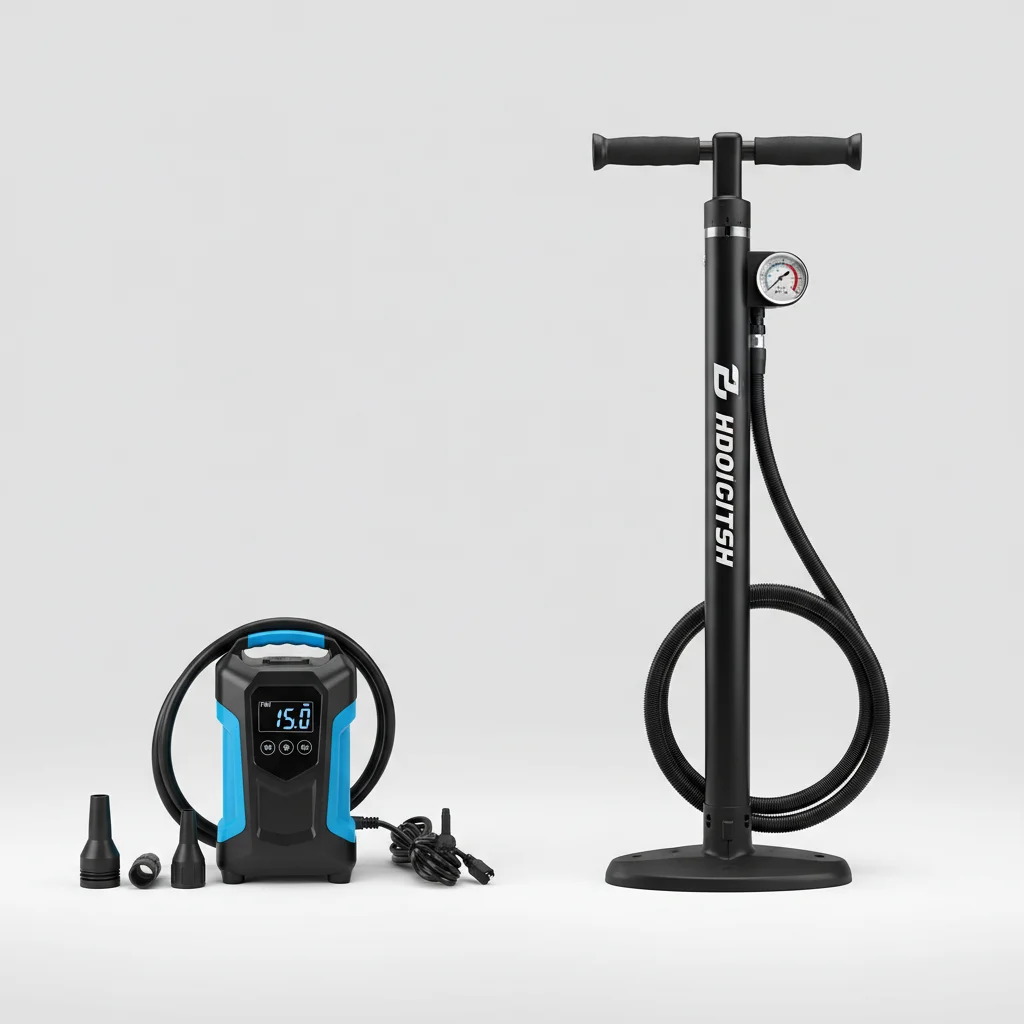
An electric pump inflates a standard 10’6″ inflatable paddle board to 15 PSI in approximately 8-12 minutes, while a manual dual-action pump typically takes 10-20 minutes. The choice between an electric and a manual pump significantly impacts your setup time and effort, with electric pumps offering greater convenience and manual pumps providing portability and a quick initial inflation.
Understanding Electric Paddle Board Pumps
Electric pumps offer ultimate convenience, allowing you to set a desired PSI and let the pump do the work. Most models plug into a 12V car outlet or feature a built-in rechargeable battery. These pumps are particularly beneficial for larger boards, multiple boards, or for paddlers who prefer to conserve energy. While generally slower than the initial stages of a manual pump, their hands-free operation makes them a popular choice.
Modern electric pumps often include automatic shut-off functions to prevent over-inflation once the target pressure is reached. Some advanced models also feature a deflate function, which is useful for tightly packing down your board. When choosing an electric pump, consider its noise level and power source, as these can vary significantly between brands.
The Efficiency of Manual Paddle Board Pumps
Manual pumps, especially dual-action models, are highly efficient during the initial stages of inflation. A dual-action pump inflates on both the upstroke and downstroke, rapidly filling the board with air. Once pressure builds, typically around 7-10 PSI, you can switch to single-action mode for easier pumping to reach higher required PSIs. Manual pumps are lightweight, portable, and do not require an external power source, making them ideal for remote locations or quick, no-fuss setups.
While manual pumping requires physical effort, it also serves as a good warm-up before hitting the water. The key to efficient manual pumping is to use your body weight and maintain a steady rhythm. Many paddlers find the control and simplicity of a manual pump appealing, especially for shorter sessions or when storage space is limited.
Factors Influencing Inflation Time
|
Our Picks for the Best Paddle Board in 2026
As an Amazon Associate I earn from qualifying purchases.
|
||
| Num | Product | Action |
|---|---|---|
| 1 | Roc Inflatable Stand Up Paddle Board 10' 6" with Premium SUP Paddle Board Accessories, Wide Stable Design, Non-Slip Comfort Deck for Youth & Adults |

|
| 2 | Highpi Inflatable Stand Up Paddle Board for Youth and Adults – Wide Sup with Premium Accessories, Blow Up Paddleboard for Surfing, Fishing, Yoga & More |
|
| 3 | FBSPORT 11' Premium Stand Up Paddle Board, Yoga Board with SUP Accessories & Carry Bag | Wide Stance, Surf Control, Non-Slip Deck, Leash, Paddle and Pump for Youth & Adult |
|
| 4 | Niphean Inflatable Stand Up Paddle Board with SUP Accessories, Anti-Slip EVA Deck, 10’6’’ Inflatable Paddle Boards for Adults & Youth of All Skill Levels |
|
| 5 | FunWater Inflatable Stand Up Paddle Board with Premium SUP Paddleboard Accessories, Anti-Slip EVA Deck, 11'/10'6'' Paddle Boards for Adults & Youth of All Skill Levels |
|
| 6 | Roc Inflatable Stand Up Paddle Board 10' 6" with Premium SUP Paddle Board Accessories, Wide Stable Design, Non-Slip Comfort Deck for Youth & Adults |
|
| 7 | Roc Inflatable Stand Up Paddle Boards with Premium SUP Paddle Board Accessories, Wide Stable Design, Non-Slip Comfort Deck for Youth & Adults |
|
| 8 | Roc Inflatable Stand Up Paddle Board 10' 6" with Premium SUP Paddle Board Accessories, Wide Stable Design, Non-Slip Comfort Deck for Youth & Adults |
|
| 9 | Retrospec June Nano Kids Inflatable Fishing Paddle Board SUP Kayak: 9'6" Hybrid Paddleboard with Rod Holders, Removable Seat - Lightweight Portable Youth Fishing Board |
|
| 10 | FunWater Inflatable Stand Up Paddle Board with Premium SUP Paddleboard Accessories, Anti-Slip EVA Deck, 11'/10'6'' Paddle Boards for Adults & Youth of All Skill Levels |
|
- Board Volume: Larger boards with higher volume will naturally take longer to inflate, regardless of the pump type.
- Target PSI: Reaching higher pressures (e.g., 18 PSI) will always require more time and effort than lower pressures (e.g., 12 PSI).
- Pump Quality: A well-designed, high-quality pump, whether electric or manual, will be more efficient than a cheaper, less robust model.
- User Stamina (Manual): For manual pumps, the paddler’s physical condition and technique play a significant role in inflation speed.
- Power Source (Electric): The power output of your 12V car outlet or the charge level of your battery can affect electric pump performance.
Choosing the Right Pump for Your Needs
The best pump depends on your priorities. If convenience and minimal effort are paramount, an electric pump is an excellent investment, allowing you to prepare your board while you get ready. For those who value portability, simplicity, and quick initial inflation, a high-quality manual pump is often sufficient. Many experienced paddlers opt for both: an electric pump for home inflation and a manual pump as a backup or for quick top-offs on the go.
Consider your primary paddling locations. If you always have access to a car, an electric pump that plugs into a 12V socket is very practical. If you frequently paddle in remote areas without vehicle access, a manual pump is essential.Investing in a reliable pump, whether electric or manual, will enhance your overall paddle boarding experience by reducing setup time and frustration.
Maintenance Tips for Your Paddle Board Pump
Proper maintenance ensures your pump lasts longer and performs efficiently. For electric pumps, regularly check the hose and nozzle for any blockages or damage. Keep the air filter clean to prevent dust and debris from entering the motor. Store it in a dry place away from extreme temperatures. For manual pumps, ensure the O-rings are lubricated and free of sand or dirt to maintain a good seal. Periodically check the hose and connectors for cracks or wear.Always store your pump in a clean, dry environment to prevent corrosion and extend its lifespan, ensuring it is ready for your next adventure.

I’ve always been a manual pump guy for the portability, but the idea of a rechargeable battery in an electric pump is really appealing for those longer trips. I usually paddle with a friend, so inflating two boards can be a bit of a workout. I’m considering making the switch for the convenience, especially since it means less effort before a long paddle.
My old manual pump was a nightmare, especially trying to get to that final 15 PSI. I just bought a new electric pump with an auto-shutoff feature, and it’s fantastic. I can literally start it, finish getting my wetsuit on, and the board is perfectly inflated. It’s made getting on the water so much less of a chore.
I got an electric pump that plugs into my 12V car outlet, and while it’s super convenient, it does feel a bit slower than I expected. It takes closer to 12-15 minutes for my board, which isn’t terrible, but I thought it would be faster. Still, it beats manual pumping, especially on a hot day.
I finally caved and bought an electric pump after years of using a manual one. The difference is night and day! Being able to just set it to 15 PSI and walk away to get my gear ready is a game-changer. It takes about 10 minutes for my 10’6″ board, which is perfect. No more sweating before I even hit the water!