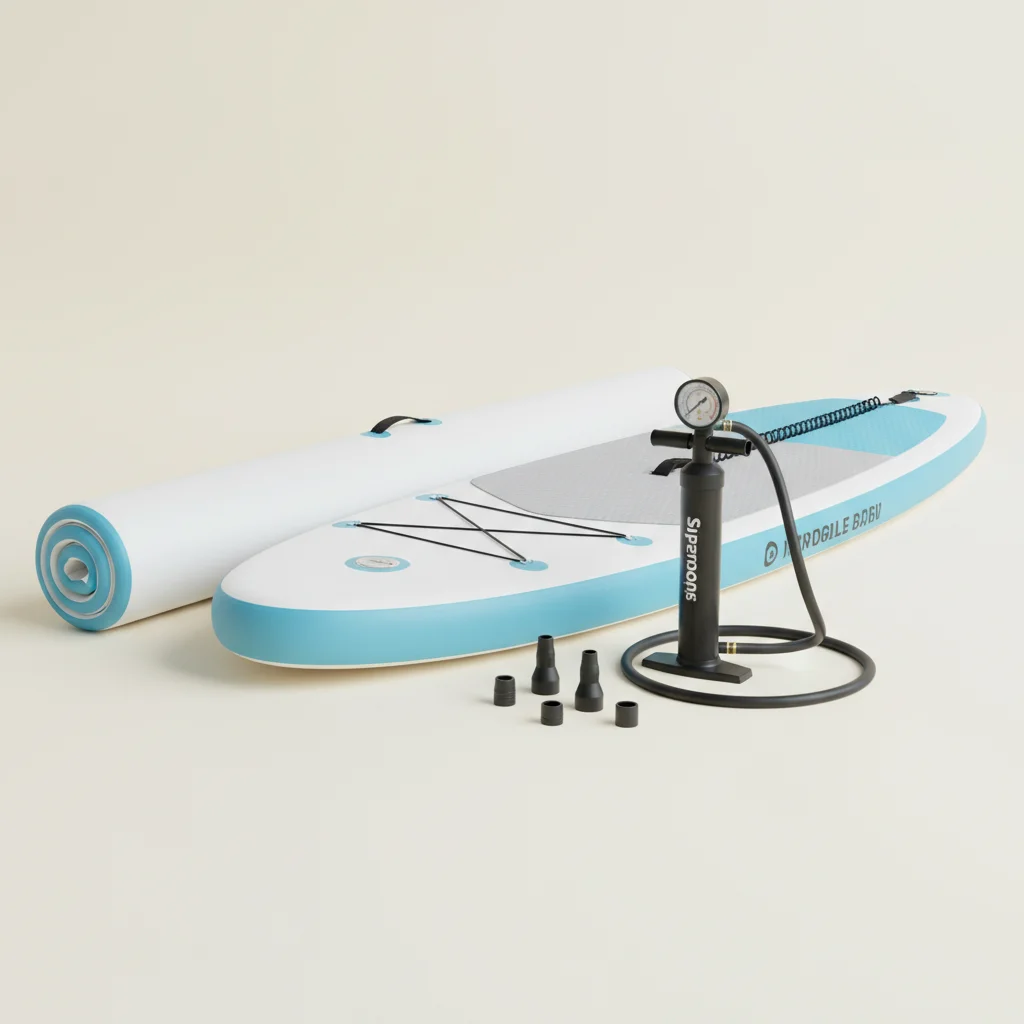
For optimal performance and longevity, most inflatable paddle boards require between 12 and 15 PSI (pounds per square inch) of air pressure. This range ensures proper rigidity and stability on the water, preventing a saggy board that’s difficult to paddle efficiently or over-stressed seams from over-inflation.
Why Proper PSI Matters for Performance
The rigidity of your inflatable paddle board directly impacts its performance. A board inflated to its recommended PSI will feel much like a hardboard, offering excellent stability and glide. This allows for more efficient paddling, better tracking, and a more enjoyable experience overall. Conversely, an under-inflated board will flex excessively, creating drag and making it harder to maintain balance, especially in choppy conditions.
Proper inflation also contributes to the board’s durability. When inflated correctly, the internal structure of the board, often drop-stitch technology, is under optimal tension, distributing stress evenly. This prevents undue strain on specific areas and extends the lifespan of your board. Always check your board’s specific PSI recommendations, usually printed near the valve or in the user manual.
Finding Your Board’s Recommended PSI
Every inflatable paddle board has a manufacturer-recommended PSI range. This information is typically found in a few key places: directly on the board itself, often near the inflation valve; in the owner’s manual that came with your board; or on the manufacturer’s website. It’s important to adhere to these guidelines to ensure both safety and performance. Most boards fall within the 12-15 PSI range, but some high-performance models might suggest up to 18 PSI.
Tools for Accurate Inflation
|
Our Picks for the Best Paddle Board in 2026
As an Amazon Associate I earn from qualifying purchases.
|
||
| Num | Product | Action |
|---|---|---|
| 1 | FBSPORT 11' Premium Stand Up Paddle Board, Yoga Board with SUP Accessories & Carry Bag | Wide Stance, Surf Control, Non-Slip Deck, Leash, Paddle and Pump for Youth & Adult |

|
| 2 | FunWater Inflatable Stand Up Paddle Board with Premium SUP Paddleboard Accessories, Anti-Slip EVA Deck, 11'/10'6'' Paddle Boards for Adults & Youth of All Skill Levels |
|
| 3 | Retrospec June Nano Kids Inflatable Fishing Paddle Board SUP Kayak: 9'6" Hybrid Paddleboard with Rod Holders, Removable Seat - Lightweight Portable Youth Fishing Board |
|
| 4 | Niphean Inflatable Stand Up Paddle Board with SUP Accessories, Anti-Slip EVA Deck, 10’6’’ Inflatable Paddle Boards for Adults & Youth of All Skill Levels |
|
| 5 | Highpi Inflatable Stand Up Paddle Board for Youth and Adults – Wide Sup with Premium Accessories, Blow Up Paddleboard for Surfing, Fishing, Yoga & More |
|
| 6 | Roc Inflatable Stand Up Paddle Board 10' 6" with Premium SUP Paddle Board Accessories, Wide Stable Design, Non-Slip Comfort Deck for Youth & Adults |
|
| 7 | Roc Inflatable Stand Up Paddle Boards with Premium SUP Paddle Board Accessories, Wide Stable Design, Non-Slip Comfort Deck for Youth & Adults |
|
| 8 | FunWater Inflatable Stand Up Paddle Board with Premium SUP Paddleboard Accessories, Anti-Slip EVA Deck, 11'/10'6'' Paddle Boards for Adults & Youth of All Skill Levels |
|
| 9 | Roc Inflatable Stand Up Paddle Board 10' 6" with Premium SUP Paddle Board Accessories, Wide Stable Design, Non-Slip Comfort Deck for Youth & Adults |
|
| 10 | Roc Inflatable Stand Up Paddle Board 10' 6" with Premium SUP Paddle Board Accessories, Wide Stable Design, Non-Slip Comfort Deck for Youth & Adults |
|
To achieve the correct PSI, you’ll need a reliable pump with a built-in pressure gauge. Most inflatable paddle boards come with a manual hand pump that includes this feature. Electric pumps are also a popular option, offering convenience and consistent inflation. When using any pump, always monitor the gauge carefully to avoid over-inflation. It’s a good practice to stop just short of the maximum recommended PSI and then top it off slowly to hit the exact number.
- Manual dual-action hand pump with gauge
- Electric 12V pump for car or portable battery
- Pressure gauge (if your pump doesn’t have one)
- Valve adapter (if needed for your specific board)
- Repair kit for unexpected leaks
The Dangers of Over and Under-Inflation
Over-inflating your paddle board can lead to serious damage. Excessive pressure can strain the seams, potentially causing them to burst or delaminate, which is often irreparable. In extreme heat, the air inside the board expands, further increasing pressure, so it’s wise to slightly under-inflate if leaving your board in direct sun for extended periods.
Under-inflation, while less catastrophic, still negatively impacts your paddling experience. A soft board will sag in the middle, making it unstable and difficult to paddle in a straight line. This requires more effort from the paddler and can lead to fatigue. It also makes the board more susceptible to damage from impacts, as the material isn’t as taut and protective.
Temperature and PSI Considerations
Temperature plays a significant role in the internal pressure of your inflatable paddle board. Air expands when heated and contracts when cooled. If you inflate your board to 15 PSI on a cool morning and then leave it in direct sunlight on a hot beach, the internal pressure can increase by several PSI. Conversely, if you inflate it on a warm day and then take it out on cold water, the pressure will drop.
It’s a good habit to check your board’s PSI before each use, especially if there’s been a significant temperature change. If you’re going to be paddling in very cold water, you might consider inflating to the higher end of the recommended range. If you plan to leave your board on a hot beach for a while, slightly under-inflating by 1-2 PSI can prevent over-pressurization.
Frequently Asked Questions
What is the ideal PSI for most inflatable paddle boards?
The ideal PSI for most inflatable paddle boards ranges between 12 and 15 PSI. This pressure ensures the board is rigid enough for stable paddling and efficient glide on the water.
Where can I find the recommended PSI for my specific paddle board?
You can typically find your board's recommended PSI printed near the inflation valve, in the owner's manual, or on the manufacturer's official website. Always refer to these specific guidelines for best performance and safety.
What happens if I over-inflate my inflatable paddle board?
Over-inflating your paddle board can cause significant damage, including straining seams, leading to bursts or delamination that are often irreparable. High temperatures can also increase internal pressure, so avoid leaving an over-inflated board in direct sunlight.
How does temperature affect my paddle board's PSI?
Temperature significantly affects your paddle board's internal pressure; air expands when hot and contracts when cold. Inflating to 15 PSI on a cool morning and then exposing it to direct sun can increase pressure by several PSI, while cold water can cause pressure to drop.
What tools are necessary for accurately inflating a paddle board?
To accurately inflate a paddle board, you need a reliable pump with a built-in pressure gauge, such as a manual dual-action hand pump or an electric 12V pump. Always monitor the gauge to prevent over-inflation.
How to Properly Inflate Your Inflatable Paddle Board
Learn the correct steps to inflate your inflatable paddle board to its optimal PSI, ensuring performance and longevity.
Locate your board's specific PSI range, usually printed near the valve, in the manual, or on the manufacturer's website. Most boards are between 12-15 PSI, but some high-performance models may go up to 18 PSI.
Attach a pump with a built-in pressure gauge to the board's valve. Manual hand pumps are common, but electric 12V pumps offer convenience. Ensure the connection is secure to prevent air leaks.
Begin inflating your board while carefully monitoring the pressure gauge. Stop just before reaching the maximum recommended PSI, then slowly add air to hit the exact target. This prevents over-inflation.
Consider temperature changes; if paddling in cold water, inflate to the higher end of the range. If leaving the board in direct hot sun, slightly under-inflate by 1-2 PSI to prevent over-pressurization as air expands.

I used to just eyeball my iSUP inflation, but after reading about the 12-15 PSI range, I finally got a proper gauge. What a difference! My board feels so much more stable now, especially when I’m trying to stand up in a bit of chop. It really does glide better and I’m not fighting a saggy board anymore. Wish I’d paid attention to this sooner.
This was a good reminder about not over-inflating. I’ve always been careful to hit the 15 PSI mark for rigidity, but I never really thought about the stress on the seams from going too high. It’s good to know that staying within the recommended range not only helps performance but also extends the life of the board. Definitely makes me feel better about my investment.
I’ve always struggled with my board feeling ‘saggy’ and thought it was just how inflatables were. Turns out I was just under-inflating! Aiming for that 12-15 PSI sweet spot has completely changed my experience. My board tracks so much better now, and I’m not constantly fighting to stay balanced. It’s like having a brand new board.
I appreciate the info on why proper PSI matters for performance. My board always feels a bit wobbly, and I’m usually around 10-11 PSI. I tried to get it up to 12 PSI, but my hand pump is just so slow and tiring. It’s a good point about stability, but I wish there was more advice on making inflation easier for those of us without electric pumps.