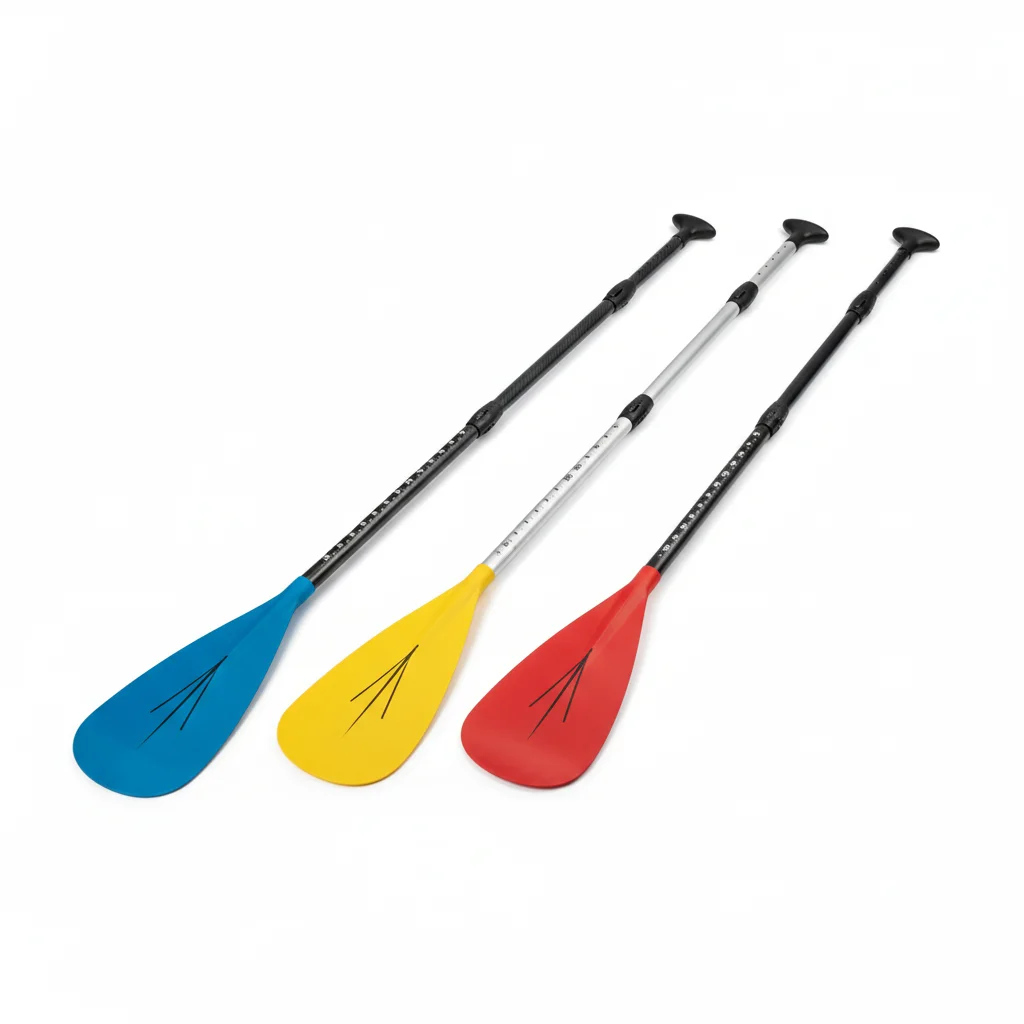
The ideal length for inflatable paddle board paddles depends primarily on your height and the type of paddling you’ll be doing. A general rule of thumb is to add 6 to 10 inches to your height for recreational paddling, and slightly less for surfing or more for racing. This range ensures comfortable and efficient strokes, preventing unnecessary strain and maximizing power transfer.
Understanding Paddle Length for Different Activities
Paddle length isn’t a one-size-fits-all measurement. For casual cruising and touring, a longer paddle (your height plus 8-10 inches) allows for a more relaxed, upright stance and deeper, more powerful strokes. This is beneficial for covering longer distances with less fatigue. Conversely, if you’re primarily surfing waves, a shorter paddle (your height plus 4-6 inches) offers better maneuverability and quicker adjustments, crucial for catching and riding waves effectively. Racing often involves even longer paddles to maximize reach and leverage.
How to Measure and Adjust Your Paddle
To find your optimal paddle length, stand upright with your arm extended overhead. The paddle handle should comfortably reach your wrist. Most adjustable paddles have markings to help you fine-tune the length. Start with the general guideline for your activity and then make small adjustments on the water. Pay attention to your posture and how much you’re bending over. If you’re hunching too much, the paddle is likely too short. If you’re reaching too far or struggling to get the blade fully in the water, it might be too long. Experimentation is key to finding your personal sweet spot.
- Stand tall with your arm extended overhead.
- Place the paddle blade on the ground.
- The paddle handle should align with your wrist.
- Adjust for specific activities: shorter for surf, longer for race.
- Test on the water and fine-tune for comfort and efficiency.
Common Mistakes in Paddle Sizing
|
Our Picks for the Best Paddle Board in 2026
As an Amazon Associate I earn from qualifying purchases.
|
||
| Num | Product | Action |
|---|---|---|
| 1 | Highpi Inflatable Stand Up Paddle Board for Youth and Adults – Wide Sup with Premium Accessories, Blow Up Paddleboard for Surfing, Fishing, Yoga & More |

|
| 2 | Roc Inflatable Stand Up Paddle Board 10' 6" with Premium SUP Paddle Board Accessories, Wide Stable Design, Non-Slip Comfort Deck for Youth & Adults |
|
| 3 | FunWater Inflatable Stand Up Paddle Board with Premium SUP Paddleboard Accessories, Anti-Slip EVA Deck, 11'/10'6'' Paddle Boards for Adults & Youth of All Skill Levels |
|
| 4 | Roc Inflatable Stand Up Paddle Board 10' 6" with Premium SUP Paddle Board Accessories, Wide Stable Design, Non-Slip Comfort Deck for Youth & Adults |
|
| 5 | Niphean Inflatable Stand Up Paddle Board with SUP Accessories, Anti-Slip EVA Deck, 10’6’’ Inflatable Paddle Boards for Adults & Youth of All Skill Levels |
|
| 6 | Roc Inflatable Stand Up Paddle Boards with Premium SUP Paddle Board Accessories, Wide Stable Design, Non-Slip Comfort Deck for Youth & Adults |
|
| 7 | Roc Inflatable Stand Up Paddle Board 10' 6" with Premium SUP Paddle Board Accessories, Wide Stable Design, Non-Slip Comfort Deck for Youth & Adults |
|
| 8 | FunWater Inflatable Stand Up Paddle Board with Premium SUP Paddleboard Accessories, Anti-Slip EVA Deck, 11'/10'6'' Paddle Boards for Adults & Youth of All Skill Levels |
|
| 9 | Retrospec June Nano Kids Inflatable Fishing Paddle Board SUP Kayak: 9'6" Hybrid Paddleboard with Rod Holders, Removable Seat - Lightweight Portable Youth Fishing Board |
|
| 10 | FBSPORT 11' Premium Stand Up Paddle Board, Yoga Board with SUP Accessories & Carry Bag | Wide Stance, Surf Control, Non-Slip Deck, Leash, Paddle and Pump for Youth & Adult |
|
One of the most common mistakes beginners make is using a paddle that is either too short or too long. A paddle that is too short forces you to bend excessively, leading to back pain and reduced stroke power. It also makes it harder to maintain balance. On the other hand, a paddle that is too long can make it difficult to get the entire blade into the water, resulting in inefficient strokes and shoulder strain. It can also feel cumbersome and unwieldy, especially in choppy conditions. Always prioritize comfort and proper technique over a generic measurement.
Materials and Their Impact on Performance
The material of your paddle also plays a significant role in its overall performance and feel. Aluminum paddles are durable and affordable, making them a popular choice for beginners, but they tend to be heavier. Fiberglass paddles offer a good balance of weight and stiffness, providing a noticeable upgrade in performance. Carbon fiber paddles are the lightest and stiffest, offering maximum power transfer and reducing fatigue, making them ideal for experienced paddlers and long-distance touring. Consider your budget and paddling frequency when choosing a material.
Maintaining Your Adjustable Paddle
Proper maintenance ensures the longevity and smooth operation of your adjustable paddle. After each use, rinse your paddle with fresh water, especially if you’ve been in saltwater, to prevent corrosion and sand buildup in the adjustment mechanism. Regularly check the locking clamps or pins to ensure they are clean and functioning correctly. If the adjustment mechanism becomes stiff, a small amount of silicone spray can help. Store your paddle in a dry, shaded area to protect it from UV damage and extreme temperatures.

Good info on paddle length, especially the height plus inches rule. I found it a little confusing trying to figure out the exact range for racing though, as it just said ‘slightly more’. A more specific number or range for racing would have been useful. Still, it’s a solid guide for recreational use.
This really helped clarify the different lengths for various activities. I mostly do touring, so knowing that a longer paddle (height plus 8-10 inches) is best for covering longer distances with less fatigue is super helpful. I’ve been using a paddle that was probably a bit too short, and I definitely felt it in my shoulders after a while. Time for an upgrade!
I’m pretty new to paddleboarding and was just guessing on paddle length. The explanation about how a longer paddle helps with a more relaxed, upright stance for casual cruising makes so much sense. I’m tall, and my current paddle felt a bit short, causing me to hunch. Now I understand why and can adjust accordingly for a much better experience.
I always struggled with finding the right paddle length, especially since I switch between casual cruising and trying to catch some small waves. The tip about adding 6-10 inches for recreational paddling and less for surfing was a game-changer. My old paddle was definitely too long for surfing, making it awkward to maneuver. Now I know exactly what to look for!