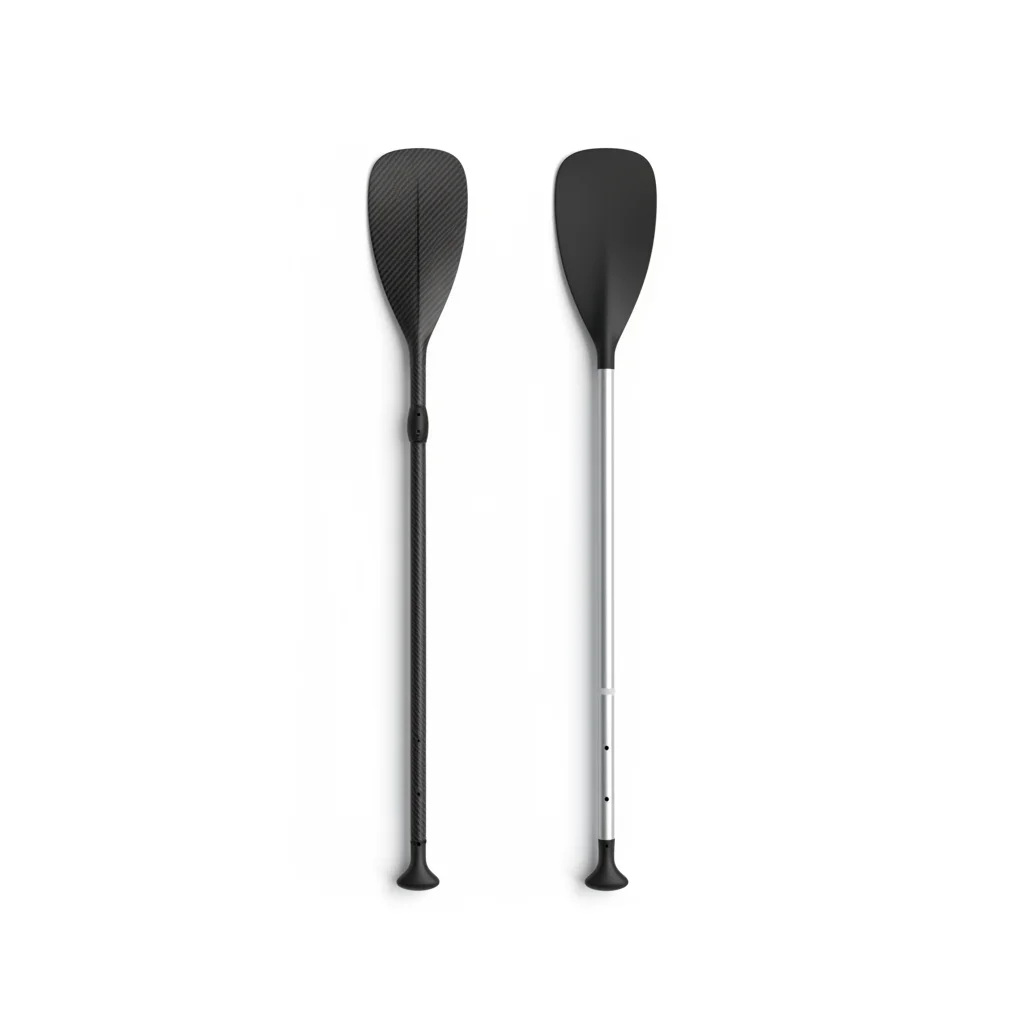
When choosing an inflatable paddle board paddle, the primary difference in weight and performance comes down to material: carbon fiber or aluminum. Carbon fiber paddles are significantly lighter, typically weighing between 1.2 to 1.8 pounds, while aluminum paddles usually range from 2.0 to 2.5 pounds. This difference of nearly a pound can have a substantial impact on your paddling endurance and overall experience on the water.
Carbon Fiber Paddles: The Performance Choice
Carbon fiber paddles are renowned for their lightweight construction and stiffness, which translates into more efficient power transfer with each stroke. This material is ideal for experienced paddlers or those planning longer excursions, as the reduced weight minimizes fatigue in the arms and shoulders. The responsiveness of carbon fiber also offers a more direct feel for the water, allowing for precise control and maneuverability. While they come at a higher price point, the performance benefits often justify the investment for serious enthusiasts.
Beyond weight, carbon fiber’s inherent strength-to-weight ratio makes these paddles incredibly durable, resisting flex and breakage under normal paddling conditions. Many high-end carbon paddles feature adjustable shafts, allowing for customization to suit different paddlers or varying water conditions. This adjustability, combined with their superior performance, makes them a top choice for those seeking to optimize their paddling efficiency.
Aluminum Paddles: Durable and Budget-Friendly
Aluminum paddles are a popular choice for beginners, recreational paddlers, and rental operations due to their robust durability and lower cost. While heavier than carbon fiber, they are highly resistant to dings and scratches, making them a practical option for frequent use or environments where the paddle might encounter rough surfaces. The added weight, though noticeable over long periods, is often negligible for shorter, casual paddles.
The construction of aluminum paddles typically involves an aluminum shaft paired with a plastic or nylon blade, further contributing to their affordability. Many models are also adjustable, providing versatility for different users. For families or those just starting out in paddleboarding, an aluminum paddle offers a reliable and economical entry point into the sport without sacrificing too much on functionality.
Hybrid Paddles: Balancing Cost and Performance
|
Our Picks for the Best Paddle Board in 2026
As an Amazon Associate I earn from qualifying purchases.
|
||
| Num | Product | Action |
|---|---|---|
| 1 | Highpi Inflatable Stand Up Paddle Board for Youth and Adults – Wide Sup with Premium Accessories, Blow Up Paddleboard for Surfing, Fishing, Yoga & More |

|
| 2 | FBSPORT 11' Premium Stand Up Paddle Board, Yoga Board with SUP Accessories & Carry Bag | Wide Stance, Surf Control, Non-Slip Deck, Leash, Paddle and Pump for Youth & Adult |
|
| 3 | Roc Inflatable Stand Up Paddle Board 10' 6" with Premium SUP Paddle Board Accessories, Wide Stable Design, Non-Slip Comfort Deck for Youth & Adults |
|
| 4 | Roc Inflatable Stand Up Paddle Board 10' 6" with Premium SUP Paddle Board Accessories, Wide Stable Design, Non-Slip Comfort Deck for Youth & Adults |
|
| 5 | Niphean Inflatable Stand Up Paddle Board with SUP Accessories, Anti-Slip EVA Deck, 10’6’’ Inflatable Paddle Boards for Adults & Youth of All Skill Levels |
|
| 6 | FunWater Inflatable Stand Up Paddle Board with Premium SUP Paddleboard Accessories, Anti-Slip EVA Deck, 11'/10'6'' Paddle Boards for Adults & Youth of All Skill Levels |
|
| 7 | Roc Inflatable Stand Up Paddle Board 10' 6" with Premium SUP Paddle Board Accessories, Wide Stable Design, Non-Slip Comfort Deck for Youth & Adults |
|
| 8 | Retrospec June Nano Kids Inflatable Fishing Paddle Board SUP Kayak: 9'6" Hybrid Paddleboard with Rod Holders, Removable Seat - Lightweight Portable Youth Fishing Board |
|
| 9 | Roc Inflatable Stand Up Paddle Boards with Premium SUP Paddle Board Accessories, Wide Stable Design, Non-Slip Comfort Deck for Youth & Adults |
|
| 10 | FunWater Inflatable Stand Up Paddle Board with Premium SUP Paddleboard Accessories, Anti-Slip EVA Deck, 11'/10'6'' Paddle Boards for Adults & Youth of All Skill Levels |
|
For paddlers looking for a middle ground, hybrid paddles offer a blend of carbon fiber and aluminum components. These often feature a carbon fiber shaft for reduced weight and an aluminum or durable plastic blade for cost-effectiveness and resilience. This combination provides a noticeable weight reduction compared to full aluminum paddles, without the premium price tag of a full carbon fiber model. Hybrid paddles are an excellent choice for intermediate paddlers or those who want an upgrade from aluminum without committing to the full expense of carbon fiber.
- Carbon Fiber Shaft with Plastic Blade: Offers good weight savings and durability.
- Carbon Fiber Shaft with Fiberglass Blade: Provides a balance of stiffness and flex.
- Aluminum Shaft with Carbon Fiber Blade: Less common, but can offer a stiffer blade.
- Adjustable Length: Most hybrid paddles are adjustable for versatility.
- Mid-Range Price Point: A good value for performance and durability.
Blade Shape and Size Considerations
Beyond material, the shape and size of the paddle blade significantly influence your paddling experience. Larger blades provide more power per stroke, ideal for strong paddlers or those needing to cover distance quickly, but can also lead to quicker fatigue. Smaller blades are easier to maneuver and less taxing, making them suitable for longer sessions, touring, or paddlers with a more relaxed style. Common blade shapes include teardrop, rectangular, and dihedral, each offering different water displacement and catch characteristics. Consider your primary paddling activity and personal strength when selecting a blade.
Maintenance Tips for Longevity
Regardless of material, proper maintenance will extend the life of your paddle. Always rinse your paddle with fresh water after use, especially if paddling in saltwater, to prevent corrosion and salt buildup. Store your paddle in a dry, shaded area away from direct sunlight to prevent material degradation. For adjustable paddles, periodically clean the adjustment mechanisms to ensure smooth operation and prevent seizing. Inspect the blade and shaft for any cracks or damage before each use, addressing minor issues promptly to prevent them from worsening.
