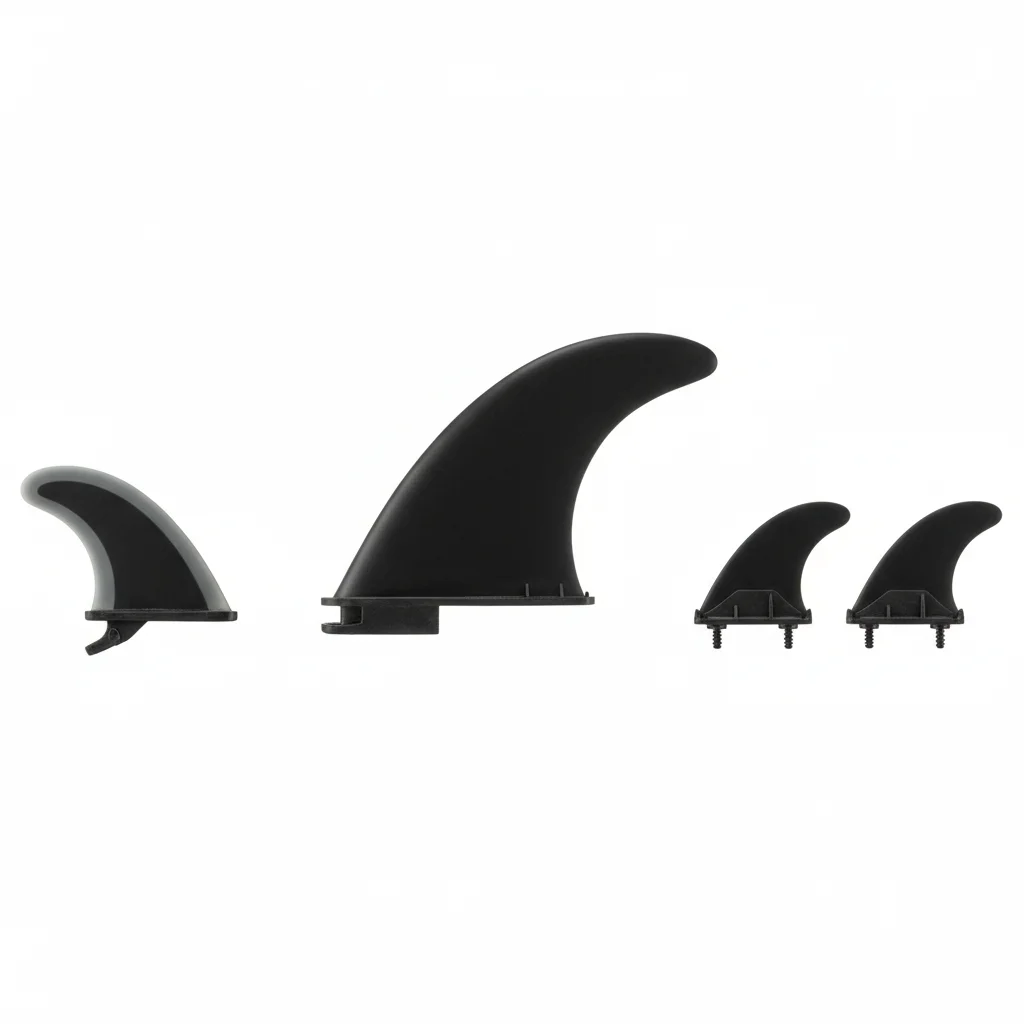
There are three main types of inflatable paddle board fins: the single fin, the 2+1 fin setup, and the thruster (or tri-fin) setup. Each configuration offers distinct advantages in terms of stability, maneuverability, and tracking, making them suitable for various water conditions and paddling styles. Understanding these differences is crucial for optimizing your paddling experience.
Single Fin Setup: Tracking and Speed
The single fin setup is the most common and often the simplest configuration found on many inflatable paddle boards. Typically, this involves one large fin positioned centrally at the tail of the board. This design excels at providing excellent tracking, meaning the board will hold a straight line more easily with fewer corrective strokes. This makes it ideal for flatwater cruising, long-distance paddling, and beginners who are still developing their stroke technique. The larger surface area of a single fin minimizes drag while maximizing directional stability, contributing to better speed and glide.
While a single fin offers superior tracking, it can sometimes make the board slightly less maneuverable for quick turns. However, for paddlers focused on efficiency and covering distances, its benefits far outweigh this minor drawback. Many single fins are removable, often using a slide-in or US fin box system, which simplifies transport and storage.
2+1 Fin Setup: Versatility and Balance
The 2+1 fin setup combines a larger central fin with two smaller side fins. This configuration is a popular choice for its versatility, offering a balanced blend of tracking and maneuverability. The larger central fin still provides good directional stability, similar to a single fin, while the two smaller side fins enhance grip and control, particularly when turning or riding small waves. This setup is often favored by intermediate paddlers and those who enjoy a variety of paddling conditions, from calm lakes to light chop.
The additional side fins provide extra stability, which can be beneficial in choppier water or when performing pivot turns. They also help to prevent the tail from sliding out during more aggressive maneuvers. This makes the 2+1 setup a great all-rounder for recreational paddling, touring, and even some light surfing.
Thruster (Tri-Fin) Setup: Maneuverability and Control
|
Our Picks for the Best Paddle Board in 2026
As an Amazon Associate I earn from qualifying purchases.
|
||
| Num | Product | Action |
|---|---|---|
| 1 | FunWater Inflatable Stand Up Paddle Board with Premium SUP Paddleboard Accessories, Anti-Slip EVA Deck, 11'/10'6'' Paddle Boards for Adults & Youth of All Skill Levels |

|
| 2 | Roc Inflatable Stand Up Paddle Board 10' 6" with Premium SUP Paddle Board Accessories, Wide Stable Design, Non-Slip Comfort Deck for Youth & Adults |
|
| 3 | FBSPORT 11' Premium Stand Up Paddle Board, Yoga Board with SUP Accessories & Carry Bag | Wide Stance, Surf Control, Non-Slip Deck, Leash, Paddle and Pump for Youth & Adult |
|
| 4 | Highpi Inflatable Stand Up Paddle Board for Youth and Adults – Wide Sup with Premium Accessories, Blow Up Paddleboard for Surfing, Fishing, Yoga & More |
|
| 5 | Retrospec June Nano Kids Inflatable Fishing Paddle Board SUP Kayak: 9'6" Hybrid Paddleboard with Rod Holders, Removable Seat - Lightweight Portable Youth Fishing Board |
|
| 6 | FunWater Inflatable Stand Up Paddle Board with Premium SUP Paddleboard Accessories, Anti-Slip EVA Deck, 11'/10'6'' Paddle Boards for Adults & Youth of All Skill Levels |
|
| 7 | Roc Inflatable Stand Up Paddle Board 10' 6" with Premium SUP Paddle Board Accessories, Wide Stable Design, Non-Slip Comfort Deck for Youth & Adults |
|
| 8 | Niphean Inflatable Stand Up Paddle Board with SUP Accessories, Anti-Slip EVA Deck, 10’6’’ Inflatable Paddle Boards for Adults & Youth of All Skill Levels |
|
| 9 | Roc Inflatable Stand Up Paddle Boards with Premium SUP Paddle Board Accessories, Wide Stable Design, Non-Slip Comfort Deck for Youth & Adults |
|
| 10 | Roc Inflatable Stand Up Paddle Board 10' 6" with Premium SUP Paddle Board Accessories, Wide Stable Design, Non-Slip Comfort Deck for Youth & Adults |
|
The thruster, or tri-fin, setup consists of three fins of roughly equal size, typically arranged with one central fin and two side fins positioned slightly forward. This configuration is designed for maximum maneuverability and control, making it the preferred choice for paddle board surfing and whitewater paddling. The three fins work together to provide excellent grip on the water, allowing for quick, responsive turns and better control in dynamic conditions.
While a thruster setup offers superior agility, it generally provides less straight-line tracking compared to a single fin or 2+1 setup. This means you might need to make more corrective strokes to maintain a straight course, which can be more tiring over long distances. However, for those who prioritize carving turns and navigating challenging waters, the thruster setup is unmatched.
Choosing the Right Fin Setup for Your Needs
Selecting the appropriate fin setup for your inflatable paddle board depends largely on your intended use and paddling style. Consider the following factors when making your decision:
- Paddling Environment: Flatwater cruising benefits from single fins for tracking, while choppier water or surfing demands the control of a 2+1 or thruster.
- Skill Level: Beginners often appreciate the stability and tracking of a single fin, while experienced paddlers might prefer the maneuverability of a thruster.
- Desired Performance: Prioritize speed and straight-line paddling with a single fin, or opt for agility and turning with a thruster.
- Removability: Most inflatable paddle board fins are removable, which is convenient for storage and travel. Ensure the fin box system is compatible with replacement fins if you plan to experiment.
Experimenting with different fin setups can significantly alter your paddling experience. Many boards come with interchangeable fin systems, allowing you to adapt your board to various conditions and activities.
Frequently Asked Questions
What are the three main types of inflatable paddle board fins?
The three main types of inflatable paddle board fins are the single fin, the 2+1 fin setup, and the thruster (or tri-fin) setup. Each type is designed for different paddling conditions and performance needs.
Which fin setup is best for flatwater cruising and long distances?
The single fin setup is best for flatwater cruising and long distances because it provides excellent tracking and directional stability. This allows the board to hold a straight line more easily with fewer corrective strokes, optimizing speed and glide.
What are the benefits of a 2+1 fin setup for paddle boarding?
A 2+1 fin setup offers a balanced blend of tracking and maneuverability, making it versatile for various conditions. The larger central fin provides stability, while two smaller side fins enhance grip and control, especially when turning or in light chop.
When should I choose a thruster (tri-fin) setup for my paddle board?
You should choose a thruster (tri-fin) setup for maximum maneuverability and control, particularly for paddle board surfing and whitewater paddling. Its three fins provide excellent grip for quick, responsive turns in dynamic conditions.
Do inflatable paddle board fins affect speed and stability?
Yes, inflatable paddle board fins significantly affect both speed and stability. A single fin generally offers better straight-line speed and tracking, while a 2+1 or thruster setup provides more stability and maneuverability for varied conditions or surfing.
Choosing the Right Inflatable Paddle Board Fin Setup
Selecting the appropriate fin setup for your inflatable paddle board depends on your intended use and paddling style. Consider your environment, skill level, and desired performance.
For flatwater cruising, a single fin is ideal for tracking. If you plan to paddle in choppier water or surf, a 2+1 or thruster setup will provide better control and stability.
Beginners often benefit from the stability and tracking offered by a single fin. More experienced paddlers might prefer the enhanced maneuverability of a thruster setup for advanced techniques.
If speed and straight-line paddling are your priorities, opt for a single fin. For agility, quick turns, and dynamic conditions, a thruster setup will be more suitable.
Most inflatable paddle board fins are removable, which is convenient for storage and travel. Ensure the fin box system is compatible if you plan to experiment with different replacement fins.

I recently upgraded to a board with a 2+1 fin setup, and the difference in maneuverability is noticeable. I used to struggle a bit with tighter turns, but now it feels much more responsive. It’s a good balance for when I want to cruise but also try out some light river paddling. Glad I made the switch!
I got a board with the thruster setup, hoping for better stability in choppier water. While it does feel a bit more stable, I’ve found it’s a little slower than my old board. It takes more effort to keep a good pace, which can be tiring on longer trips. I guess there’s always a trade-off, but I wish it was a bit faster.
I’ve always used a single fin setup on my iSUP for flatwater cruising, and it’s been great for tracking. I never really understood the technical reasons why it worked so well until now. This really clarified why my board holds a straight line so easily, which is perfect for those long paddles on the lake. Definitely makes me appreciate my current setup even more!
This was super helpful! I’m a beginner and was so confused about all the different fin options. Knowing that the single fin is best for tracking and flatwater cruising makes my decision so much easier. I just want to go straight and enjoy the scenery without fighting the board. Thanks for breaking it down!