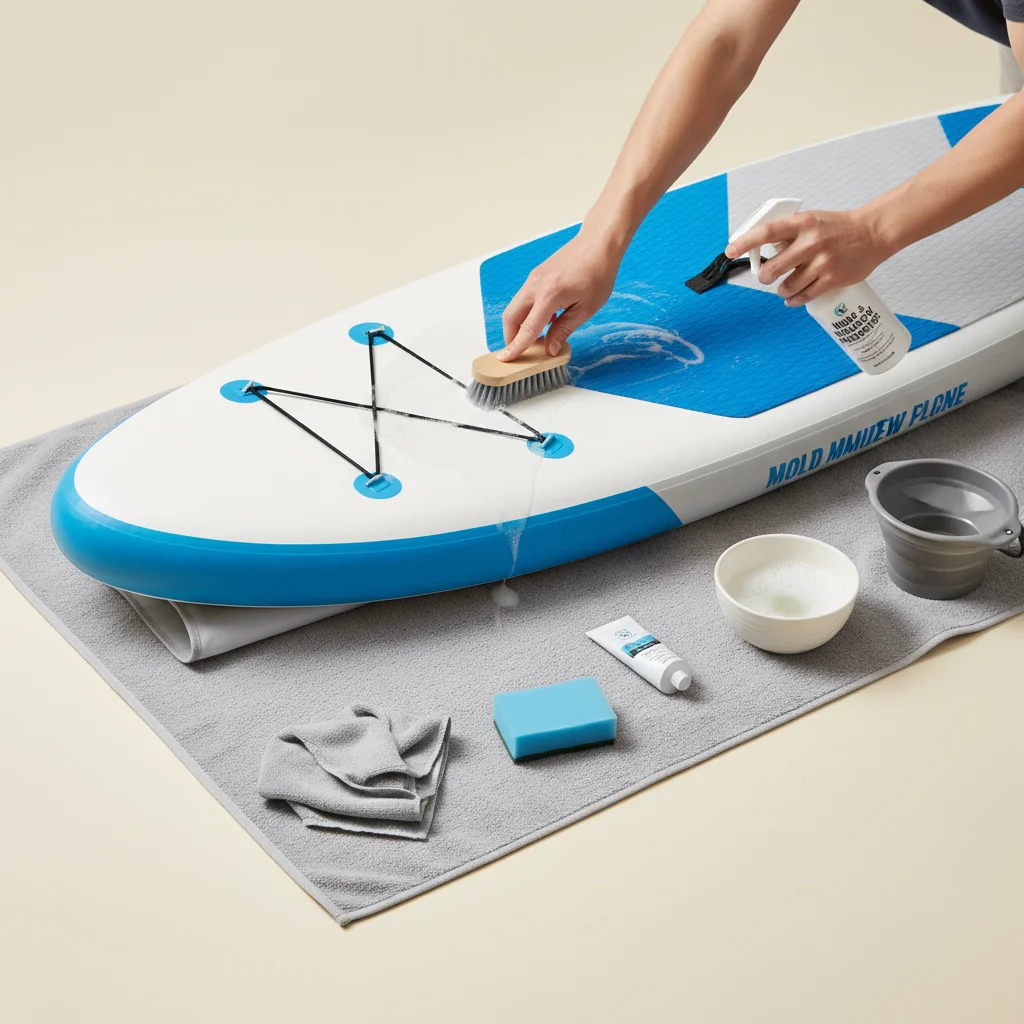
Preventing mold and mildew on your inflatable paddle board is crucial for its longevity and your health. The most effective strategy involves a three-step process: thorough cleaning, complete drying, and proper storage. By consistently following these steps, you can significantly reduce the risk of fungal growth, ensuring your board remains in pristine condition for many seasons.
Understanding Mold and Mildew on iSUPs
Mold and mildew are types of fungi that thrive in damp, dark environments. On an inflatable paddle board, they often appear as black, green, or white spots, particularly in areas where water tends to pool or where the board is folded without being fully dry. Beyond being unsightly, these fungi can degrade the material of your board over time, leading to discoloration, unpleasant odors, and potentially weakening the PVC fabric. For paddlers, exposure to mold can also trigger allergic reactions or respiratory issues, making prevention a key aspect of responsible board ownership.
The Essential Cleaning Routine
After every use, especially if you’ve been in brackish or saltwater, a thorough cleaning is paramount. Start by rinsing your entire board with fresh water, paying close attention to seams, fin boxes, and the EVA deck pad. Use a soft brush or sponge with a mild, pH-neutral soap to gently scrub away any dirt, algae, or residue. Avoid harsh chemicals or abrasive cleaners, as these can damage the PVC material and graphics. For stubborn spots, a diluted solution of white vinegar (1 part vinegar to 4 parts water) can be effective. Rinse again thoroughly to remove all soap and vinegar residue.
The Critical Step: Complete Drying
This is arguably the most important step in preventing mold and mildew. After cleaning, wipe down your board with a clean, dry towel. Then, allow it to air dry completely in a shaded, well-ventilated area. Direct sunlight can be too intense and potentially damage the board’s material over time, so indirect drying is preferred. Ensure every surface, including the top, bottom, rails, and especially the deck pad, is bone dry before proceeding to storage. If possible, leave the board inflated or partially inflated during the drying process to allow air circulation to all surfaces. This can take several hours, so patience is key.
Proper Storage Techniques
|
Our Picks for the Best Paddle Board in 2026
As an Amazon Associate I earn from qualifying purchases.
|
||
| Num | Product | Action |
|---|---|---|
| 1 | FunWater Inflatable Stand Up Paddle Board with Premium SUP Paddleboard Accessories, Anti-Slip EVA Deck, 11'/10'6'' Paddle Boards for Adults & Youth of All Skill Levels |

|
| 2 | Roc Inflatable Stand Up Paddle Board 10' 6" with Premium SUP Paddle Board Accessories, Wide Stable Design, Non-Slip Comfort Deck for Youth & Adults |
|
| 3 | Niphean Inflatable Stand Up Paddle Board with SUP Accessories, Anti-Slip EVA Deck, 10’6’’ Inflatable Paddle Boards for Adults & Youth of All Skill Levels |
|
| 4 | Roc Inflatable Stand Up Paddle Boards with Premium SUP Paddle Board Accessories, Wide Stable Design, Non-Slip Comfort Deck for Youth & Adults |
|
| 5 | Roc Inflatable Stand Up Paddle Board 10' 6" with Premium SUP Paddle Board Accessories, Wide Stable Design, Non-Slip Comfort Deck for Youth & Adults |
|
| 6 | FunWater Inflatable Stand Up Paddle Board with Premium SUP Paddleboard Accessories, Anti-Slip EVA Deck, 11'/10'6'' Paddle Boards for Adults & Youth of All Skill Levels |
|
| 7 | FBSPORT 11' Premium Stand Up Paddle Board, Yoga Board with SUP Accessories & Carry Bag | Wide Stance, Surf Control, Non-Slip Deck, Leash, Paddle and Pump for Youth & Adult |
|
| 8 | Retrospec June Nano Kids Inflatable Fishing Paddle Board SUP Kayak: 9'6" Hybrid Paddleboard with Rod Holders, Removable Seat - Lightweight Portable Youth Fishing Board |
|
| 9 | Roc Inflatable Stand Up Paddle Board 10' 6" with Premium SUP Paddle Board Accessories, Wide Stable Design, Non-Slip Comfort Deck for Youth & Adults |
|
| 10 | Highpi Inflatable Stand Up Paddle Board for Youth and Adults – Wide Sup with Premium Accessories, Blow Up Paddleboard for Surfing, Fishing, Yoga & More |
|
Once your inflatable paddle board is completely dry, proper storage is the final defense against mold and mildew. If you plan to store it deflated, roll it loosely rather than folding it tightly, as tight folds can trap moisture in creases. Store the rolled board in its original bag or a breathable storage bag in a cool, dry place away from extreme temperatures and humidity. Garages, basements, or sheds can be suitable, provided they are not prone to dampness. Avoid storing your board in direct contact with concrete floors, as concrete can wick moisture. Consider placing it on a raised platform or using a moisture-absorbing packet inside the storage bag. For long-term storage, some paddlers prefer to store their boards partially inflated to minimize creases and allow for better air circulation.
Dealing with Existing Mold and Mildew
If you discover mold or mildew on your board, don’t despair. A solution of white vinegar and water (1:1 ratio) or a specialized marine mildew remover can often do the trick. Apply the solution to the affected area, let it sit for 10-15 minutes, then scrub gently with a soft brush. Rinse thoroughly with fresh water and ensure the board is completely dry before storing. For persistent stains, a very diluted bleach solution (1 part bleach to 10 parts water) can be used as a last resort, but always test on an inconspicuous area first and rinse meticulously to prevent material damage.Regularly inspecting your board, even during storage, can help catch any new growth early.
Key Takeaways for a Mold-Free Board
- Always rinse your board with fresh water after every use.
- Use mild soap and a soft brush for cleaning; avoid harsh chemicals.
- Ensure the board is 100% dry before storing, especially the deck pad.
- Store in a cool, dry, well-ventilated area, away from direct sunlight.
- Consider storing partially inflated or loosely rolled to prevent moisture traps.
By integrating these practices into your post-paddling routine, you can effectively prevent mold and mildew, extending the life of your inflatable paddle board and ensuring it’s always ready for your next adventure. A little effort in maintenance goes a long way in preserving your investment and enhancing your paddling experience.
