To properly store an inflatable paddle board (iSUP) for winter, thoroughly clean and dry it completely to prevent mold, then inspect for and repair any damage. Store the board either loosely rolled and fully deflated in its bag, or partially inflated to 4-10 PSI on a flat surface, in a cool, dry, and temperature-stable indoor environment away from direct sunlight and pests. This process safeguards your investment and extends the iSUP’s lifespan.
Why Proper Winter Storage is Essential for Your iSUP
The off-season might seem like a simple break for your inflatable paddle board, but it’s a critical period where environmental factors can take a heavy toll. Leaving your iSUP uncleaned, improperly folded, or in an unsuitable environment can lead to irreversible damage. Extreme cold can make the PVC material brittle, increasing the risk of cracks and punctures, while fluctuating temperatures stress the board’s construction and adhesives. Lingering moisture is a breeding ground for mold and mildew, which can stain and degrade the deck pad and fabric. Proper storage is not just about convenience; it’s about preserving the integrity, performance, and longevity of your beloved paddle board.
Step-by-Step Guide to Preparing Your Inflatable Paddle Board for Winter
Preparing your iSUP for its winter slumber is a methodical process that starts with thorough cleaning and ends with careful storage. Each step plays a vital role in protecting your board from common off-season ailments.
Thorough Cleaning and Drying
Before thinking about storage, a meticulous cleaning is paramount. Begin by rinsing your inflatable paddle board thoroughly with fresh water to remove all saltwater, sand, mud, and any other debris from your last paddle. For stubborn dirt or grime, use a mild, biodegradable soap, such as a gentle dish cleaner, mixed with water and a soft sponge or cloth. Pay special attention to the deck pad, fin boxes, and valve stem, as these areas often accumulate hidden residues. After scrubbing, rinse the board completely to ensure no soap residue remains, as this can attract dirt over time.
The most critical step in this phase is drying. Your iSUP must be 100% dry before storage. Even a small amount of trapped moisture can lead to mold and mildew growth, which not only looks unsightly but can also damage the board’s materials and create an unpleasant odor. Lay your board flat in a shaded, well-ventilated area for several days, turning it periodically to allow air to circulate around all surfaces. Some paddlers prefer to leave their board slightly inflated (around 4-6 PSI) during the drying process to help it maintain shape and ensure all crevices air out effectively.
Inspecting for Damage and Minor Repairs
|
Our Picks for the Best Paddle Board in 2026
As an Amazon Associate I earn from qualifying purchases.
|
||
| Num | Product | Action |
|---|---|---|
| 1 | Retrospec June Nano Kids Inflatable Fishing Paddle Board SUP Kayak: 9'6" Hybrid Paddleboard with Rod Holders, Removable Seat - Lightweight Portable Youth Fishing Board |

|
| 2 | FunWater Inflatable Stand Up Paddle Board with Premium SUP Paddleboard Accessories, Anti-Slip EVA Deck, 11'/10'6'' Paddle Boards for Adults & Youth of All Skill Levels |
|
| 3 | Roc Inflatable Stand Up Paddle Board 10' 6" with Premium SUP Paddle Board Accessories, Wide Stable Design, Non-Slip Comfort Deck for Youth & Adults |
|
| 4 | Roc Inflatable Stand Up Paddle Board 10' 6" with Premium SUP Paddle Board Accessories, Wide Stable Design, Non-Slip Comfort Deck for Youth & Adults |
|
| 5 | FBSPORT 11' Premium Stand Up Paddle Board, Yoga Board with SUP Accessories & Carry Bag | Wide Stance, Surf Control, Non-Slip Deck, Leash, Paddle and Pump for Youth & Adult |
|
| 6 | Highpi Inflatable Stand Up Paddle Board for Youth and Adults – Wide Sup with Premium Accessories, Blow Up Paddleboard for Surfing, Fishing, Yoga & More |
|
| 7 | Niphean Inflatable Stand Up Paddle Board with SUP Accessories, Anti-Slip EVA Deck, 10’6’’ Inflatable Paddle Boards for Adults & Youth of All Skill Levels |
|
| 8 | Roc Inflatable Stand Up Paddle Boards with Premium SUP Paddle Board Accessories, Wide Stable Design, Non-Slip Comfort Deck for Youth & Adults |
|
| 9 | Roc Inflatable Stand Up Paddle Board 10' 6" with Premium SUP Paddle Board Accessories, Wide Stable Design, Non-Slip Comfort Deck for Youth & Adults |
|
| 10 | FunWater Inflatable Stand Up Paddle Board with Premium SUP Paddleboard Accessories, Anti-Slip EVA Deck, 11'/10'6'' Paddle Boards for Adults & Youth of All Skill Levels |
|
Once your iSUP is clean and dry, take this opportunity to conduct a thorough inspection. Carefully examine the entire board for any signs of wear and tear, such as small punctures, abrasions, scratches, or minor seam separation. Check the valve for any leaks or damage. If you find any minor issues, it’s best to address them immediately using your board’s provided patch kit or a suitable repair kit for inflatable PVC. Repairing small problems now prevents them from worsening during storage and ensures your board is ready to go as soon as the paddling season resumes.
Deflating and Folding (or Partial Inflation)
When it comes to putting your iSUP away, you have a choice: fully deflate and fold it or store it partially inflated.
Fully Deflated and Rolled/Folded
If space is a concern, fully deflating and neatly rolling or folding your board is the most compact option. Open the valve and allow the air to naturally escape. You can assist by gently rolling the board from the nose towards the tail (valve end), slowly forcing out any remaining air. The key here is to roll or fold loosely and avoid creating sharp creases or tight folds. Excessive pressure on seams or tight folds can put undue strain on the material, potentially causing damage or permanent wrinkles over time. Once deflated, place the board back into its original travel bag, which offers protection from dust and light abrasions.
Partially Inflated Storage
For those with ample space, storing your iSUP partially inflated is often recommended. Inflate the board to a low pressure, typically around 4-6 PSI, or even up to 8-10 PSI maximum. This helps the board retain its natural shape and prevents the development of permanent creases that can occur with tight folding. Partial inflation also reduces stress on the seams compared to storing a fully inflated board that might experience pressure changes due to temperature fluctuations. If opting for partial inflation, ensure it’s stored horizontally on a rack or flat surface, never on its rails or nose, to prevent deformation.
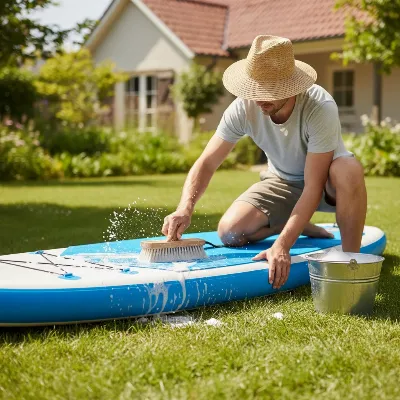 A person diligently cleaning an inflatable paddle board with a soft brush and mild soap before winter storage, illustrating attention to detail and thoroughness.
Securing Accessories
about your iSUP’s accessories! Thoroughly clean and dry all detachable components, including fins, leash, paddle, and pump. Remove any sand, salt, or dirt, and ensure they are completely dry before storage to prevent rust or mildew. Store these items with your board, ideally within the same travel bag if you’ve opted for deflated storage, or in a separate, dry container if your board is partially inflated. Keeping accessories together ensures everything is accounted for and ready for next season’s adventures.
Choosing the Ideal Winter Storage Location
The environment where your iSUP spends the winter months is just as crucial as its preparation. A suitable storage location can make all the difference in preserving your board’s condition.
Temperature and Humidity Considerations
The best place to store your inflatable paddle board is in a cool, dry, and temperature-stable indoor environment. A basement, garage (if insulated and heated), or even a spare room within your house are ideal. The goal is to avoid extreme temperature fluctuations and freezing conditions. Temperatures below freezing can make the PVC material brittle and weaken the adhesives, leading to potential seam failures. Conversely, excessive heat can also degrade materials over time. Consistent moderate temperatures help maintain the board’s material integrity and longevity.
Humidity is another critical factor. Damp or moisture-heavy areas are prime environments for mold and mildew growth, even on a thoroughly dried board. Ensure your chosen storage spot is well-ventilated and dry.
Protection from Sunlight and Pests
Direct sunlight and UV rays are notorious for degrading paddle board materials, causing fading and weakening over time. Always store your iSUP away from windows or any area where it could be exposed to direct sunlight. If storing it inflated or partially inflated on a rack, consider using a breathable cover for added UV protection.
Finally, protect your board from pests. A storage bag offers some defense, but ensure your storage area is generally free from rodents or insects that could potentially damage the board or its components. Avoid placing heavy objects on top of your stored iSUP, as prolonged pressure can cause permanent deformation or damage.
Inflated vs. Deflated Storage: Which is Right for You?
The decision to store your inflatable paddle board inflated, partially inflated, or fully deflated often depends on available space and personal preference, with each method offering distinct advantages.
Storing your iSUP fully deflated and rolled into its bag is the most space-efficient option, making it ideal for apartments or homes with limited storage. However, it requires careful rolling to avoid tight creases that can stress the material. If you choose this method, periodically unroll and re-roll your board with different fold lines to prevent permanent set-in creases.
Partially inflated storage (4-10 PSI) is an excellent compromise, maintaining the board’s shape while minimizing the risk of creasing. It requires more space than deflated storage but less than a fully inflated board. This method is often favored for reducing stress on the seams from cold temperatures and preventing wrinkles.
Fully inflated storage is only recommended if you have ample space in a temperature-controlled environment and the board is stored horizontally on a rack. Even then, it’s wise to slightly deflate the board to release some air pressure, as temperature changes can cause air inside the board to expand or contract, potentially stressing the seams.
Off-Season Maintenance Tips
Winter storage isn’t a “set it and forget it” task. Periodic checks during the off-season can catch potential issues before they become major problems. Every few months, take a moment to inspect your stored iSUP. Look for any signs of moisture, mold, or mildew, especially if storing in a garage or basement. Wipe down any damp areas promptly. Check the seams and valve area to ensure no slow leaks or weaknesses are developing. If you’ve stored your board partially inflated, top off the air occasionally to maintain pressure and relieve any stress on the folds. These small checks can ensure your board remains in top shape for its next season.
Common Mistakes to Avoid When Storing Your Paddle Board
Avoiding common storage pitfalls is just as important as following best practices. A frequent mistake is storing a damp board, which inevitably leads to mold and mildew. Another common error is tightly folding or compressing the board, especially from the same spots repeatedly, causing permanent creases and weakening the material. Leaving your iSUP in an unheated garage or shed where it’s exposed to freezing temperatures or wide temperature swings can severely degrade the PVC and adhesives. Exposing the board to direct sunlight, even during winter, will accelerate material breakdown. Finally, to clean and store all accessories properly; a neglected paddle or fin can be just as problematic as a damaged board when spring arrives.
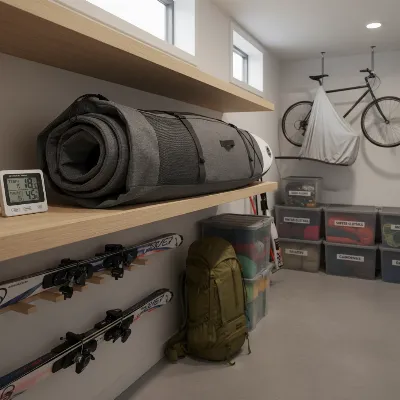 An inflatable paddle board stored loosely rolled in a breathable bag in a dry, organized storage room, demonstrating proper winter storage techniques.
Conclusion
Proper winter storage is a fundamental aspect of inflatable paddle board ownership, crucial for extending the life and maintaining the performance of your gear. By dedicating time to thorough cleaning, complete drying, careful rolling or partial inflation, and selecting an appropriate storage location, you protect your investment from the harsh realities of the off-season. Whether you opt for compact deflated storage or spacious partial inflation, the key is consistency in care and attention to environmental details. Your efforts now will be richly rewarded with a perfectly preserved iSUP, ready to dive back into the water for countless new adventures next spring. What exciting new waters will you explore with your well-maintained paddle board next season?
Frequently Asked Questions
Should I store my inflatable paddle board fully inflated or deflated for winter?
You can store your inflatable paddle board either fully deflated and loosely rolled for space-saving, or partially inflated to 4-10 PSI to help maintain its shape and prevent creases. Fully inflated storage is generally not recommended due to potential stress from temperature-induced pressure changes on the seams.
Can I store my iSUP in an unheated garage during winter?
It is generally not advisable to store your iSUP in an unheated garage, especially in regions with freezing winters. Extreme cold can make the PVC material brittle and weaken adhesives, potentially causing damage. A cool, dry, and temperature-stable indoor environment is ideal for long-term storage.
How do I prevent mold and mildew on my inflatable paddle board during storage?
To prevent mold and mildew, ensure your iSUP is absolutely 100% dry before storing it. Any trapped moisture will encourage growth. Store the board in a dry, well-ventilated area, and periodically check on it during the off-season for any signs of dampness.
What should I do with my paddle board accessories for winter storage?
Clean and thoroughly dry all detachable accessories like fins, leash, and paddle. Store them with your board in a dry place. This prevents rust, mildew, and ensures all components are together and ready for use when the paddling season returns.
What is the ideal temperature range for storing an inflatable paddle board?
The ideal temperature range for storing an iSUP is cool and stable, avoiding extremes of heat or cold. Consistent moderate temperatures help preserve the integrity of the PVC material and adhesives, extending the board's lifespan and preventing material degradation.
How to Store Your Inflatable Paddle Board for Winter
Properly storing your inflatable paddle board (iSUP) for the winter off-season involves several key steps to ensure its longevity and readiness for the next paddling season. Follow this guide to protect your investment.
Rinse your iSUP with fresh water to remove all debris, then use a mild, biodegradable soap for stubborn dirt. The most critical step is ensuring the board is 100% dry before storage; lay it flat in a shaded, well-ventilated area for several days, turning periodically.
After cleaning and drying, carefully examine the entire board for any small punctures, abrasions, or seam separations. Address any minor issues immediately using your board's patch kit to prevent them from worsening during storage.
Choose between fully deflating and loosely rolling the board into its travel bag, or partially inflating it to 4-10 PSI. Avoid tight folds or creases in either method to prevent material stress and permanent wrinkles.
Clean and thoroughly dry all detachable accessories, including fins, leash, paddle, and pump. Store them with your board, either in the travel bag or a separate dry container, to prevent rust or mildew and ensure they are ready for next season.
Store your iSUP in a cool, dry, and temperature-stable indoor environment, such as a basement or insulated garage. Avoid extreme temperature fluctuations, direct sunlight, and damp areas to protect the board's materials from degradation and mold.

This guide was a lifesaver! I always just shoved my iSUP in the garage, but after reading about how extreme cold can make the PVC brittle, I realized I needed a better plan. The tip about storing it partially inflated at 4-10 PSI on a flat surface makes so much sense for preserving its shape. My board is now tucked away safely for the winter, and I feel much better about its longevity.
Good advice here. I’ve always been pretty good about cleaning my board, but I never really thought about how important it is to get it completely dry to prevent mold. The detailed steps for cleaning and then inspecting for damage before storage were really helpful. I opted for the loosely rolled method in its bag, and it fits perfectly in my closet now.
The information about temperature-stable indoor environments is useful, but I wish there were more budget-friendly suggestions for those of us without extra indoor space. My garage isn’t heated, so I’m still a bit worried about the fluctuating temperatures affecting the material. I did make sure to clean and dry it thoroughly, which was a good reminder.
Fantastic guide! I’ve been paddling for years, but winter storage always felt a bit like guesswork. The emphasis on keeping it away from direct sunlight and pests is something I hadn’t considered as much. Following these steps, especially the full deflation and loose roll, gives me peace of mind that my investment will be ready to go next spring without any surprises.